
Traveller's guide · Female · Solo · Safe
12 min · Honest & lived · By Asmoon
Travelling Morocco as a woman.
The honest version. What to wear in the medina vs. the mountain village, hammam etiquette, when to say no, the riads we recommend by name, the small habits that buy quiet.
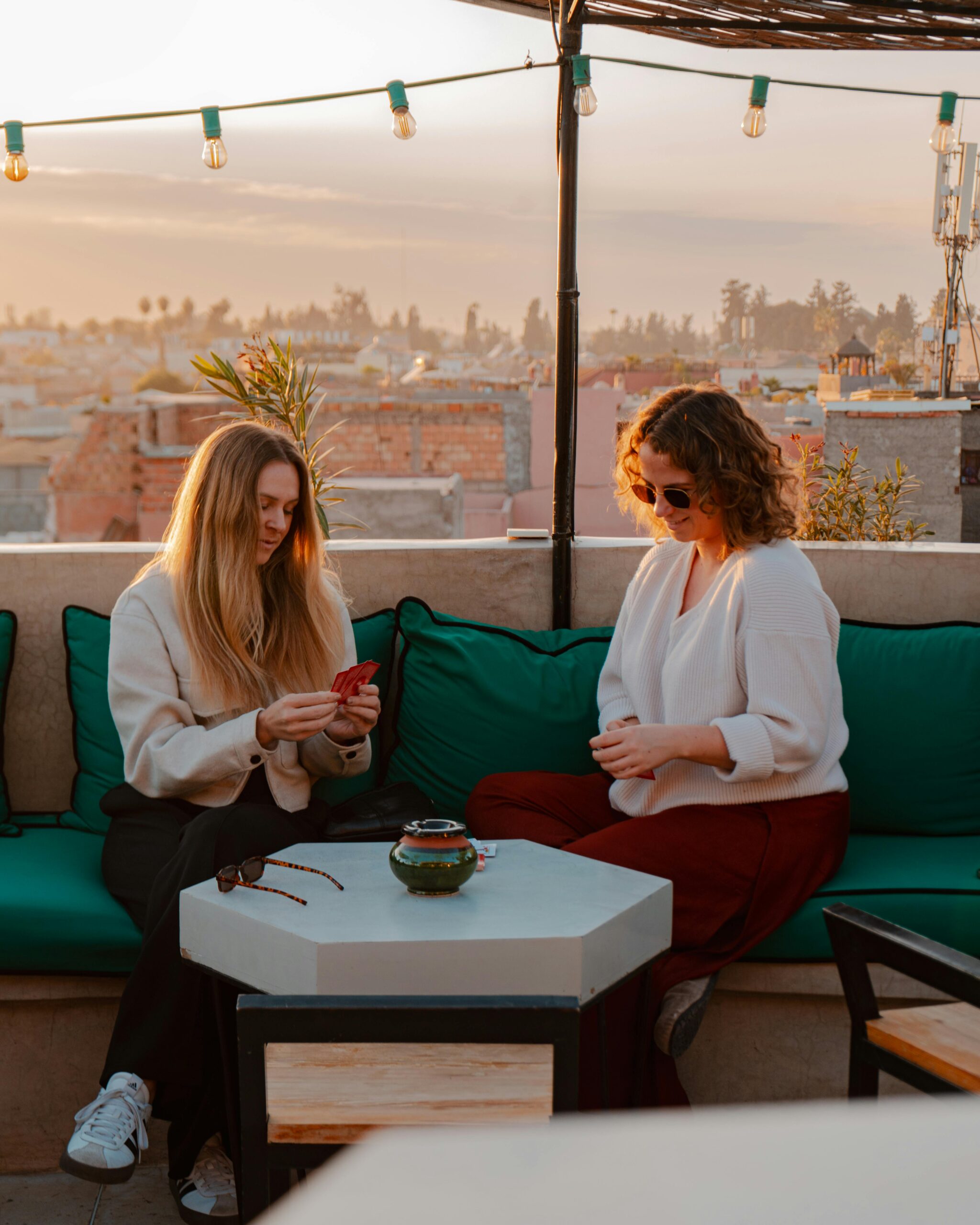
A note from Asmoon. I was raised here, I travel here as a woman every month, and I've led four other women travellers through their first Moroccan trip. This is what I'd tell my sister.
Morocco for solo women travellers exists somewhere between the warnings and the wonder. The truth: it's safe. It's also chronically noisy with attention you didn't ask for. The catcalls are real. The pushy "guides" in the medina are real. The marriage proposals are a daily comedy. None of it has ever escalated into actual harm in three years of leading women here — but all of it can wear you down if you arrive unprepared.
Here's what changes when you know what's coming: the noise becomes background, the people who matter come into focus, the medinas become rooms you walk through with the same posture as you'd walk through your own. The riads you choose stop being hotels and start being homes. The cafés where solo women drink mint tea become yours. Within three days every woman I've travelled with stops noticing the catcalls.
This guide is the version I wish someone had handed me when I started leading other women here. It's not breezy — the situations described are real. It's not catastrophising either. It's the lived, specific, "what I actually do" version. Read it before you go. You'll have a better trip.
Within three days, every woman I've travelled with stops noticing the catcalls. By day five they're laughing at the marriage proposals.Asmoon · from the field
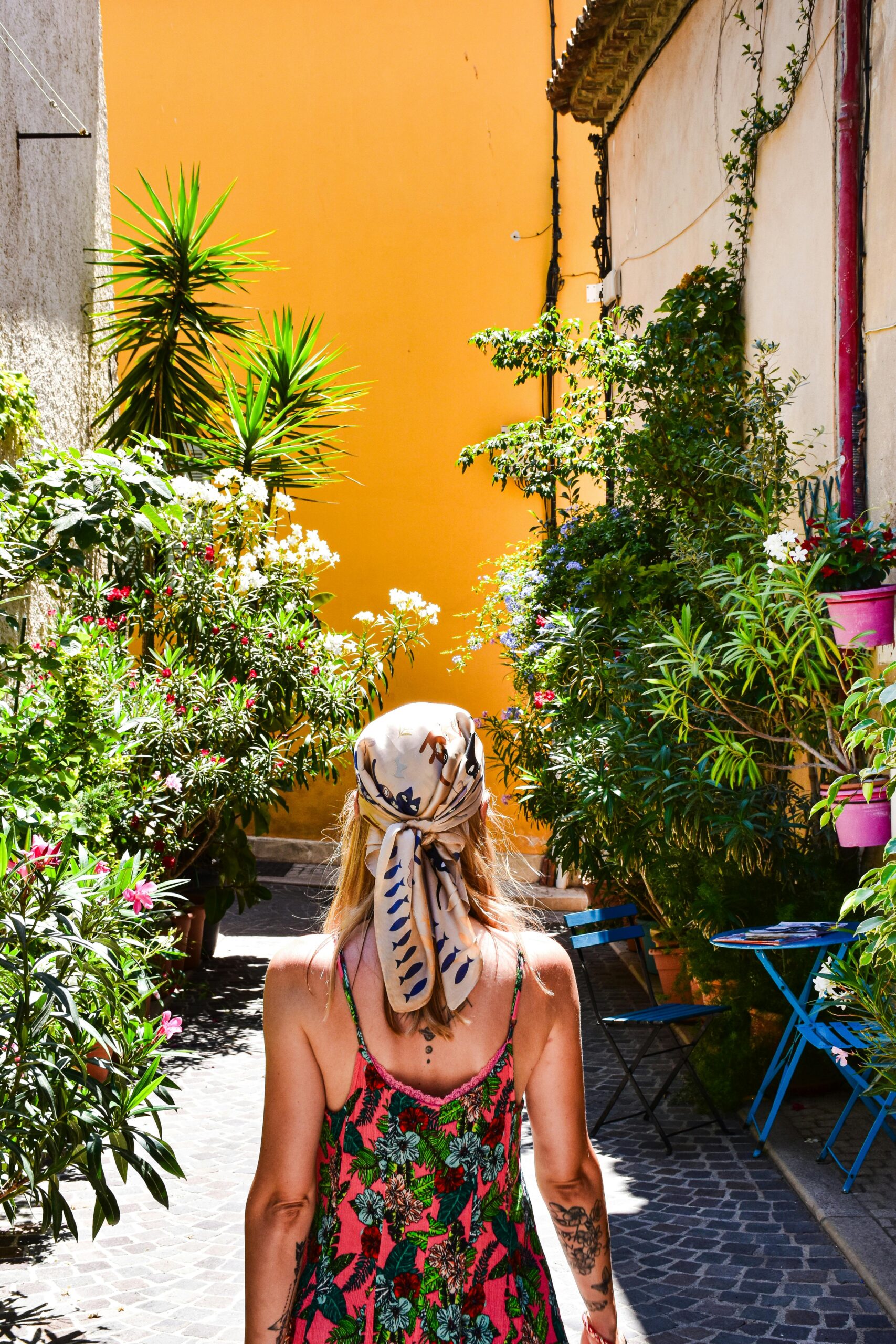
The medinas are different at 7am. By the time the call to prayer ends, you can have entire streets to yourself.
What to wear
Region by region.
Morocco is not one dress code. And the single most counter-intuitive truth: dressing up like an "important local" gets you less attention than dressing scruffy like a tourist. Read on.
Marrakech medina Jemaa & the souks
Modest-ishLong trousers or a loose skirt past the knee, three-quarter sleeves minimum. Here's the trick nobody tells you: buy a 250 MAD caftan from any souk on day one and wear it loose over trousers. You'll read as a Moroccan-friendly resident, not a tourist. Catcalls drop by half overnight. Avoid the Saadian Tombs and Bahia Palace at the moment tour buses dump (10am, 2pm) — harassment around tour entrances is the worst in the city.
High Atlas villages Imlil, Ait Souka, the valleys
ConservativeWear what the local women wear: long sleeves, ankle-length, and a scarf loose around your shoulders. A specific tip: tie the scarf the way Berber women do — pulled across the back of the head, not under the chin. The difference reads instantly. You'll be invited into kitchens, walked through orchards, fed walnuts. Wear hiking trousers in trekking-only contexts; change to long trousers in the villages.
Atlantic coast Essaouira, Taghazout, Imsouane
RelaxedBikinis fine at surf beaches (Tamri, Banana Beach, Imsouane); sundresses fine in Essaouira's medina. The exception nobody mentions: avoid bikinis at urban beaches like Rabat, Casablanca corniche, or Tangier city beach. Those are local family beaches, not tourist ones — full Moroccan women swim in caftans there. Stick to dedicated surf beaches if you want Western swim norms.
Sahara & the south-east Merzouga, Zagora, Erfoud
PracticalLong loose layers, more about sun than modesty. The Berber turban tied by your guide is the single best photo of your trip — let him do it, tip him 20 MAD, keep it as a scarf afterward. A reliable detail: Sahara group tours mix you with 5–15 other travellers for 3 days. Travelling alone in this group is the safest you'll feel anywhere — the camp culture is protective of every woman in it.
Fès & the conservative north Meknes, Chefchaouen
ConservativeMost conservative dress code of the major cities. Long trousers, covered shoulders, scarf within reach. Fès-specific: there are alleys in the medina locals call "Derb Wakid" (dead-end alleys) — if your map looks like a single dead-end, turn around. The Andalusian quarter (Adoua) is calmer than the Karaouine quarter. Stay in the Andalusian side and your daily medina walk is significantly easier.
Tangier & the Mediterranean north Asilah, Tetouan, Nador
MixedMore European feel. Tangier's Petit Socco crowd dresses freely. The hard rule: avoid the Avenue d'Espagne and the area immediately below the medina by the port — that's where hashish hustles and aggressive attention concentrate. Stay in the Kasbah (the upper quarter inside the medina walls) and you can walk for hours unbothered. Asilah is the easiest northern town for solo women, period.
The cultural moment most travellers stress about
The hammam — step by step.
Half the questions women ask before a Morocco trip are about the hammam. Here's exactly what happens and what to bring — so by your first visit it's the most relaxing two hours of your trip.
Pick the right hammam — and read the towel.
Two kinds: spa hammams (touristy, 250–500 MAD, English-speaking, often inside riads) and neighbourhood hammams (the real thing, 30–80 MAD). For your first visit the spa version is gentler; for the actual experience, go neighbourhood. The towel-colour code that nobody tells tourists: in most neighbourhood hammams a red towel hung at the door means it's the women's session, blue means men's. If no towel, knock and ask — the attendant will tell you in five seconds. Women's hours usually run roughly 10am–5pm, men's evening — never mixed.Asmoon's pick: Hammam Mouassine in Marrakech (Tuesday mornings, 50 MAD); Bain Mernissi in Fès; Bain Said in Tangier.
Bring exactly this kit.
Flip-flops (the marble is wet and slippery), a small towel, your own savon noir (black olive-oil soap, jar form — ask any pharmacy for "savon noir bel mer-ber", 15–25 MAD), a kessa glove (exfoliating scrub mitt, 10–20 MAD), shampoo, and a small jar of ghassoul (Atlas clay mask, 20 MAD). Spa hammams provide all this; neighbourhood ones don't — buy yours at a pharmacy or hanout the day before. Wear underwear you don't mind getting wet. Local women often go topless; tourists almost never do. Bottom layer alone is normal and accepted.
Three rooms, getting hotter. Lie down.
Three chambers: cool entry (lay your towel down on a bench, leave clothes there — this is the safe zone, nothing gets stolen), warm room (10–15 minutes to soften skin), hot steam room (8–12 minutes). Lie down on the marble, on your back, eyes closed. Don't sit up. Don't make small talk. Local women lie there in silence for 20+ minutes — this is the meditative core. Drink water from the spigot if you brought a bottle; otherwise an attendant brings a bucket. Pace yourself — first-timers often think they're tougher than the heat and stand up dizzy.
Get scrubbed — don't try to do it yourself.
Pay the attendant 40–80 MAD for the "kessage" — the full-body scrub with the kessa glove. The amount of dead skin she'll lift off you in 10 minutes is genuinely shocking the first time (we mean it — little grey rolls; everyone in the room sees). It feels rough — that's the point. Don't try to scrub yourself: you'll do half the job and miss your own back. The attendants are middle-aged women who've done this 30 years; trust them. They will turn you over without ceremony, scrub your scalp, rinse you from a hot bucket.
Ghassoul mask, hair wash, then COLD rinse.
Apply ghassoul to your face (and hair if you want shine) — 15 minutes, lying down. Shampoo and condition. Then the part nobody warns you about: finish with a full-body rinse of cold water. The attendant will fill a bucket from the cold tap and tip it over you without warning. Yes it's freezing. Yes you'll yelp. Yes it's why your skin will glow for 36 hours afterward — it closes the pores and locks in everything you just did. Total time: 90 min to 2 hours.
Dress slowly, tip generously, and become a regular.
Sit on the entry bench for 15 minutes before going outside — your body is still hot, the temperature shock outside can give you a headache. Drink mint tea (5–10 MAD at the door). Here's the lasting insider tip: tip the attendant 50 MAD instead of 20 on your first visit. The next time you walk in, she'll remember you, save you the best marble slab, and quietly protect you from anyone giving you a hard time. We've seen attendants chase men out of corridors for tourists who once tipped well. Do at least two hammams on a 7-day trip. You'll fly home addicted.
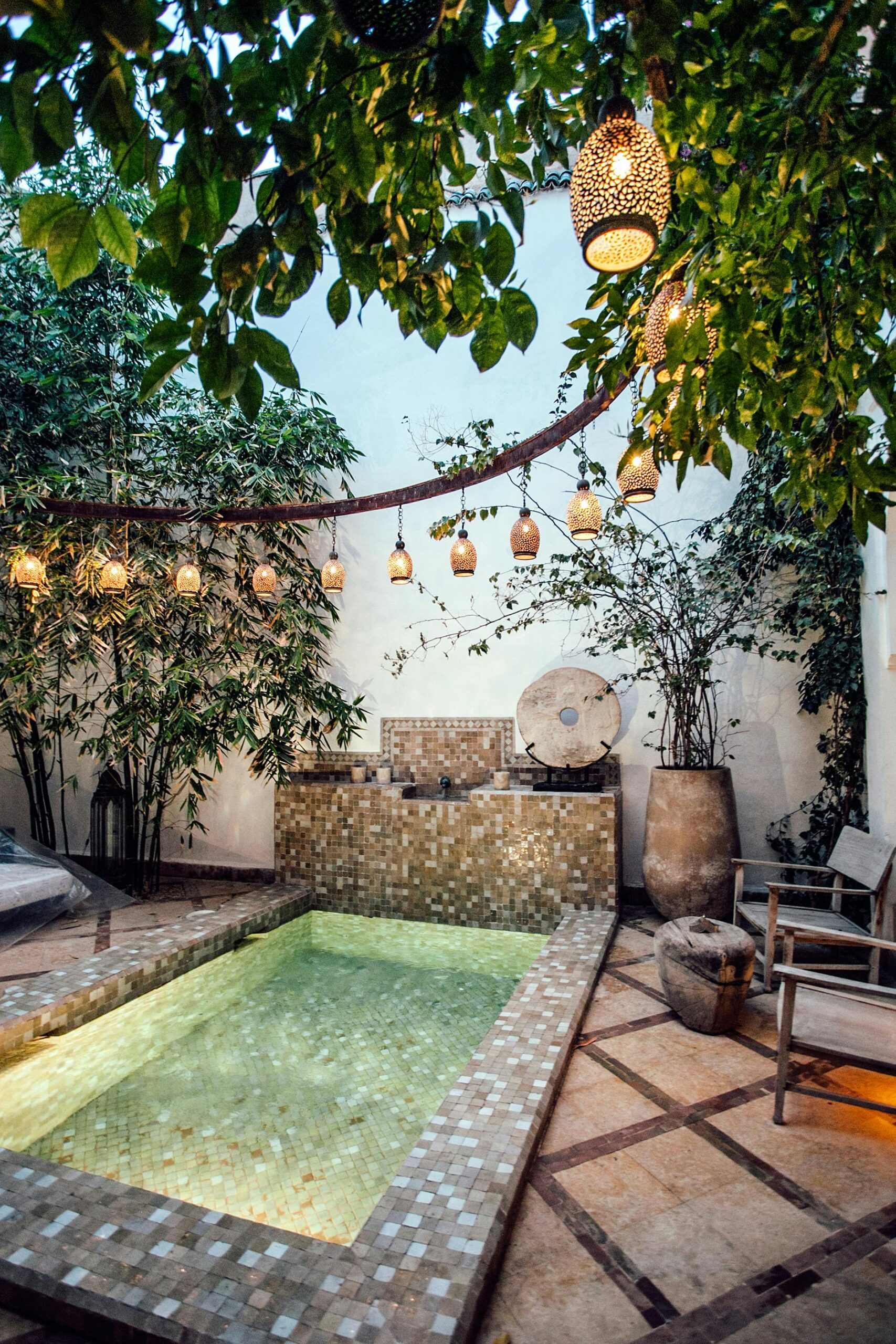
The 24-hour post-hammam glow is the single most addictive feeling Morocco offers. Plan two visits, minimum.
The situations — and the lines
When to say no.
Most of these situations resolve in 10 seconds if you have the line ready. The hard part is knowing what's coming. Here's the inventory.
The line works — use it
- Never reply "ça va" to a catcall Catcalls open with "bonjour gazelle", "ça va belle?", "hello sister". Replying anything — even a polite "ça va" — is read as engagement. Silence + walk = "not interested." Eye contact = "keep talking." This isn't rude here. It's the local script. Watch how Moroccan women handle it — they look past, not through.
- The "Bel Mokhtar" line If a man is pushing you to "come see his cousin's shop" or sit at his café: say "Désolée, j'attends Mokhtar" (Sorry, I'm waiting for Mokhtar). Mokhtar is a common Moroccan male name. It implies you have a local connection meeting you imminently. It ends 90% of pestering in under 10 seconds. Pair with a glance at your watch.
- The marriage proposal — play it back Comes 3–5 times a day. Mostly from men under 25, mostly sport. Laugh, gesture at your ring, say "Mon mari m'attend à l'hôtel dans 10 minutes" (my husband is waiting at the hotel in 10 minutes). The specific 10 minutes matters — vague answers invite follow-up; concrete ones end the conversation. Add a name if pressed. Walk on smiling.
- The phone-call trick if you're followed A man trailing you for more than 30 seconds in the medina: pull out your phone, call (or fake-call), and start a loud one-sided conversation in your loudest language. "Yes, I'm two minutes away, I can see the gate." Most stalkers peel off within a block. If they don't, walk directly into the nearest open shop and ask to wait inside — shopkeepers will protect you, no questions.
- Order in Arabic, change the room Café culture shifts the moment you order in Arabic. "Atay bi nana" for mint tea. "Qhwa nuss nuss" for half-coffee-half-milk. Three Arabic words, and waiters seat you better, treat you as "the foreign woman who knows", and protect your table from male attention. The cost of learning two phrases on the plane is genuinely large.
- The taxi-grandfather rule For petit taxis at night: look for the older drivers with white beards. They are without exception the safest. They will drop you at the actual door of your riad (not the nearest gate), refuse small tips, and remember you. Once you've used one, save his WhatsApp — you'll call him every evening of your trip. Salma keeps two grandfather drivers on speed-dial in Marrakech.
When to escalate — loudly
- "Hshouma!" — the one Arabic word to memorise If anyone touches you, blocks your path, or escalates verbally: say it LOUDLY — HSH-OO-ma. It means "shame on you." This is the cultural nuclear option. Within five seconds, every Moroccan in earshot — especially older men and women — will turn on the perpetrator. The community polices itself when you signal correctly. We've never seen it fail.
- Find the nearest grandmother The single most underappreciated safety net in Morocco: older Moroccan women (50+, sitting on stoops, in café corners, at souk stalls). If you're being followed, walk over, sit near her, smile. She'll silently chase the man off with a single look or a sharp word. Tip her if you can. We've seen this play out a dozen times. The grandmother network is real.
- The 5–8pm catcall peak Catcalling triples between 5pm and 8pm — men leaving work, hanging around cafés before dinner. Plan museums, hammams, and indoor activities for this window; back out after 8pm when families fill the streets and the mood mellows. The medina at 9pm is calmer than at 6pm, against all intuition.
- Use the Maghreb call as a timer The sunset call to prayer (Maghreb, around 6:30pm in autumn, 8:30pm in summer) is your daily safety signal. Be back near your riad by Maghreb. After it, the medina mood shifts within 30 minutes — cafés close, alleys empty, the streetlights aren't reliable. This is the unwritten local rhythm. Follow it.
- Free hashish in Chefchaouen / Tangier Politely decline. It's illegal despite the cultural openness; tourist arrests happen and police set up sting operations near the medina gates. The drug also makes the "guide" dynamic unequal in ways you won't enjoy. If you want to try, it's done privately in trusted local company — not from someone you met five minutes ago.
- The Marjane / Carrefour escape Every Moroccan city has a Marjane or Carrefour supermarket. When the medina is too much — and there are days when it will be — grab a petit taxi and go. Air-conditioned, no harassment, indoor café, clean toilets, English signage. Sit there for an hour. Regroup. Buy snacks. Then go back. This is what locals do; tourists rarely think to.
The small things that buy quiet
Habits that make the day easier.
None of these are required. All of them, used together, make Morocco a markedly smoother experience as a solo woman. Most travellers adopt them by day three anyway — here they are up front.
In the street & medina
- Dress UP, not downNice clothes attract less attention than scruffy tourist gear. Counter-intuitive but real.
- The 250 MAD caftan trickAny souk caftan worn loose over trousers reads as local-friendly camouflage.
- Walk with intentEven when lost, look like you know exactly where you're going.
- Sunglasses alwaysHeadphones optional, but powerful for medina walking.
- A ring on the left handAny ring. The signal does the work.
- Mention dietary rules offhand"I don't drink" reads as possibly Muslim. Ends religious questioning fast.
- Eye contact reads as invitationLook just past men's shoulders, not through them or at them.
- Ask women for directionsA woman, shopkeeper, or security guard. Never a man on the street.
- "The souk is closed" is a lieIf a guide insists it is, it isn't. Keep walking.
- Photos of locals: ask or don'tEspecially in Berber villages, where it's deeply rude.
In cafés, taxis & the riad rhythm
- Sit on terraces, not indoorsAvoid indoor cafés where all chairs face the street — men-only by custom.
- Order in Arabic"Atay bi nana" for mint tea, "qhwa nuss nuss" for half-coffee, half-milk.
- Back of the petit taxiNever up front. Standard local etiquette for solo women.
- WhatsApp your riad every legMorning out, neighbourhood change, late return. They expect it.
- Become a regular by day threeFind your café, your hammam, your fish stall. Same place daily.
- Tip older women generouslyRiad cleaner, hammam attendant, market women. Quiet protection follows.
- Save grandfather-driver numbersTwo or three per city. The safest taxi network you can build.
- Buy from cooperatives, not souksBetter prices, real product, calmer dynamic, women everywhere.
- Skip urban beaches for swimmingSurf beaches only. Rabat, Casa corniche, Tangier city beach are local family zones.
- Bring your own tamponsPads are everywhere; tampons rare and pricey. Stock up before flying.
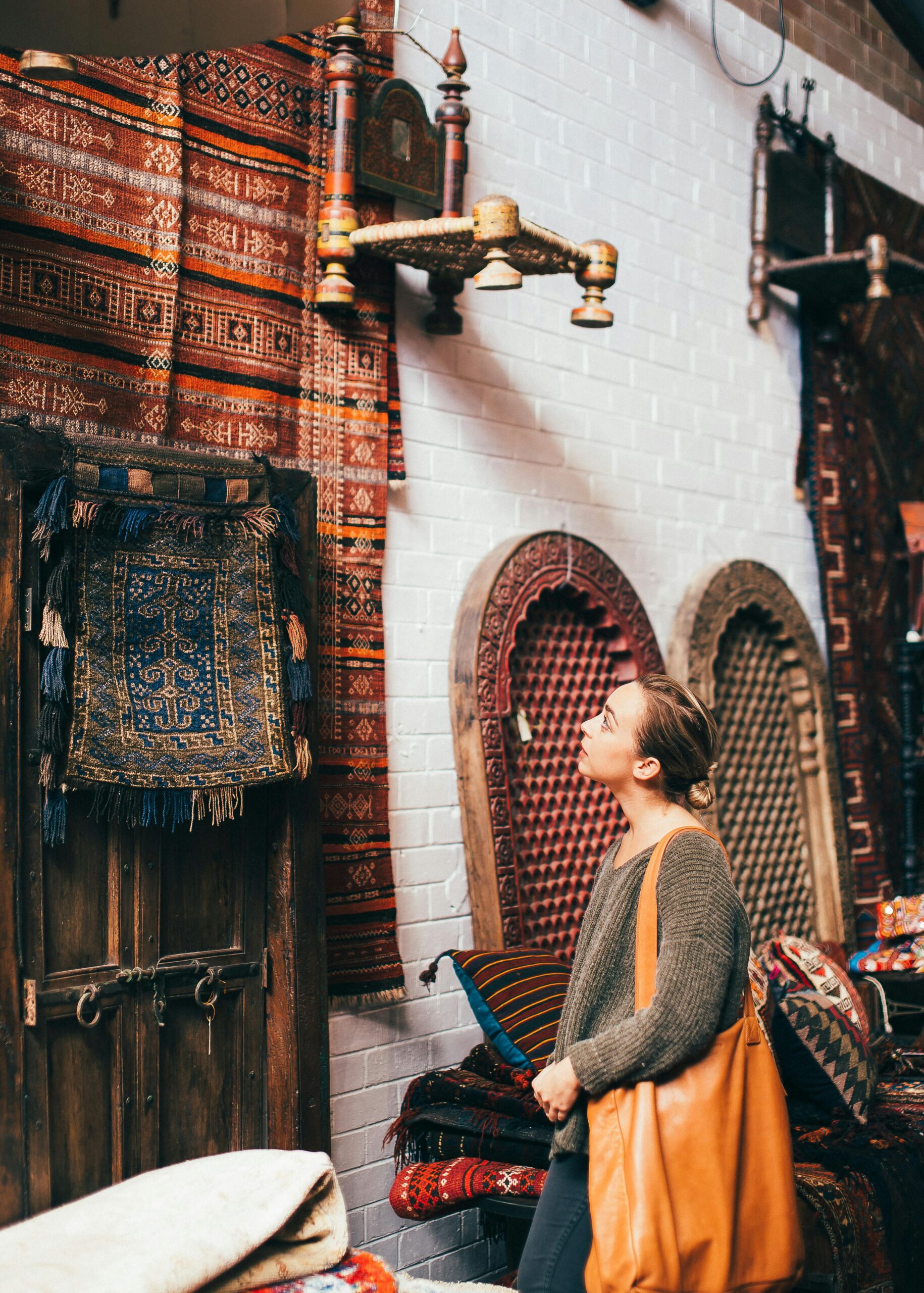
A cooking class, a language-exchange café, a Tuesday hammam. Three places where solo women turn into women with local friends.
Small comforts Morocco offers women
Things you didn't know existed.
Morocco has more woman-friendly infrastructure than you'd expect from the outside — if you know to look for it. Eight quiet wins, mostly unsigned, mostly invisible to first-time travellers.
The women's-only train carriage ONCF national rail
Almost no traveller knows this: ONCF (the Moroccan national railway) reserves a women-only carriage on most long-distance trains. It's the front carriage, marked with a small pink-pictogram sticker. Same ticket, same comfort, zero male attention for 7 hours. Ask the conductor: "Wagon des femmes, s'il vous plaît". He'll walk you there.
The pharmacy network Pharmacie de garde
Pharmacies are the most professional, female-friendly service infrastructure in Morocco. Most have at least one female pharmacist, prescriptions are filled in seconds, and a system called "pharmacie de garde" means one in every neighbourhood stays open 24/7 (the schedule is posted on every closed pharmacy door). Period products, painkillers, contraception, antibiotics — all available without prescription for symptoms most travellers worry about.
All-women cooking schools Marrakech, Fès, Essaouira
A category that's quietly exploded in the last five years. Cooperatives where Berber and Moroccan women teach traditional cooking to female travellers in their own kitchens. 4–6 hours, 350–500 MAD, includes a market trip + the meal you make. Asmoon's recommendations: La Maison Arabe (Marrakech), Café Clock cooking school (Fès), L'Atelier Madada (Essaouira). All-women environment, you leave with recipes and Moroccan WhatsApp friends.
Language-exchange cafés Marrakech, Rabat, Fès
Every major city has at least one café where local women meet visiting women for language exchange — you swap an hour of English for an hour of Darija. Cafe Clock runs weekly "language tables" in three cities; Le Jardin Secret in Marrakech has a Tuesday women's circle. These are how solo women travellers turn into people with local friends within 48 hours.
The hammam "women's day" protocol Neighbourhood hammams
Beyond the daily morning/afternoon split: many neighbourhood hammams have one full day per week reserved entirely for women. Usually Tuesday or Friday. On that day a male attendant won't even be on the premises — the entire building, including the changing rooms, is women-only. Ask: "Yom n'sa?" (women's day?) at any hammam — the attendant will tell you which day.
Female-friendly trekking guides Atlas Mountain Guides Association
For Atlas trekking, ask any reputable agency for a female guide or a vetted female-friendly male guide. The Atlas Mountain Guides Association (Imlil) keeps a register. Specifically request someone "muátamad" (trusted) for solo women travellers. Asmoon's pick: Brahim from Mountain Voyage Morocco — led solo women on Toubkal for fifteen years, has every safety habit drilled in.
The Friday rhythm Country-wide
Friday is the Muslim holy day. Many small shops close from 11am-3pm for prayers. Couscous is the traditional Friday lunch — restaurants serve their best version, often only one day a week. Banks close earlier. Plan museums for Friday morning, indoor café for Friday lunch, take the afternoon slow. Friday-evening medinas are surprisingly social as families come out after prayers.
Ramadan iftar invitations If you travel in the holy month
If your trip overlaps Ramadan (2026: Feb 17–March 18), ask your riad if you can join an iftar — the sunset meal that breaks the fast. Most will say yes. Bring dates or fruit as a gift. The meal: harira soup, dates, chebakia pastries, msemen, mint tea, then a full dinner two hours later. The single most generous version of Morocco you can experience. You'll be hugged by women you've never met. They'll send you home with leftovers.
The comfort kit
What to pack for ease, not just survival.
Beyond clothes — the small items that turn an OK Morocco trip into a comfortable one. Most are tiny; most cost nothing. All are worth the space.
For your bag, every day
- Two scarvesOne for sun, one folded in your bag for impromptu cover.
- Your own tamponsPads are everywhere here; tampons are rare and pricey.
- Refillable water bottle1L is plenty — refill at every café through the day.
- Hand sanitiser & tissuesMedina toilets often have neither soap nor paper.
- Painkillers & electrolytesOr buy at any pharmacy — they're on every corner.
- Passport photocopyIn your daypack; the original stays in the riad safe.
- Sunglasses on a strapYou'll wear them all day. The strap saves them.
- A small notebookFor café notes, recipes, language scraps, sketches.
For your phone, before you fly
- Careem & inDriverTaxi apps with prices set up front. No haggling.
- Maps.meOffline maps for every city you'll visit.
- GlovoFood delivery straight to your riad in big cities.
- Google TranslateArabic + French downloaded for offline use.
- WhatsAppAlmost all local calls in Morocco run through it.
- Local SIMOrange or Maroc Telecom — 80 MAD for 20GB at the airport kiosk.
- Riad on speed-dialPin their WhatsApp to your home screen on day one.
- A voice note from your host"If lost or worried, message me." Saved on your phone.
Things we learned the hard way
Notes from four women.
Asmoon plus three women who let us share what they learned on their own trips here. Specific, lived, the kind of detail that only comes after the fact.
— Asmoon
My Tuesday hammam ritual.
I do Hammam Mouassine off Rue Mouassine every Tuesday morning. 50 MAD entry, 60 MAD for the full kessage scrub. Two hours of women steam-singing, gossiping, washing each other's hair, and slapping ghassoul on each other's faces. I bring my own savon noir and ghassoul from the corner hanout (35 MAD total). The attendant Fatima remembers my name. She always saves me the marble slab near the corner. Tipped her 100 MAD the first time. She's been my hammam mother ever since. This is the version of Marrakech the tourists never find — it's a 4 MAD bus ride and a polite smile away.
— Yasmine, traveller
The riad-as-anchor strategy.
Two weeks alone here. What made the biggest difference: I stayed minimum 3 nights at every riad — never two, never one. By day two the staff knew my name. By day three they were walking me to restaurants, sending pre-arranged taxis, texting iftar invitations. The owner of my Fès riad ended up calling my Marrakech riad to vouch for me. Don't maximise; minimise the number of new front desks. Booking 12 different places in 14 days is the most common mistake solo women make — you have no protection because no one knows you yet.
— Sofia, traveller
Cafe Clock saved my evening.
First night alone in Fès. Walked the medina, got overwhelmed, retreated to Cafe Clock for dinner. Wifi, English menu, women everywhere, live music starting at 8pm. The single best dinner solo I've had anywhere in North Africa — the staff seated me next to two other solo women without being asked. I went back three more times that trip. Marrakech, Fès and Chefchaouen all have a Cafe Clock. Add Henna Café in Marrakech and Earth Café in Tangier to that list of safe havens — same vibe, same protective culture.
— Salma, Asmoon's cousin
The grandfather drivers.
If you're solo at night, look for the older drivers — the ones with white beards and grandfather hands on the wheel. They are without exception the safest. They drop you at your actual door, refuse small tips with offence, and remember your name the next morning. I now have two on WhatsApp in Marrakech: Hajji Brahim (works Gueliz/medina) and Hajji Mostapha (works the airport line). Ask any older taxi who's reliable in his quarter; the trustworthy ones name each other.
— Asmoon
The grandmother bench in Sidi Ghanem.
The thing tourists never realise: older Moroccan women silently protect solo female travellers. I've watched it happen to others a dozen times. If you're being pestered, find the nearest woman over 50 — sitting on a stoop, behind a market stall, in a café corner. Sit near her. Smile. Within 60 seconds she will silently chase off whoever's bothering you — a single look, sometimes a sharp word in Darija. They do this because they remember being young women. Tip them if you can. The grandmother network is real and it spans every souk in the country.
— Yasmine, traveller
The women's-cooperative purchase shift.
Skip the souk. Buy your argan, saffron, ghassoul, spices from a women's cooperative. Cooperative Marjana in the Ourika Valley (45 min from Marrakech) for argan; Cooperative Souktana in Taliouine for saffron; Cooperative Tichka for ghassoul. Better product, fair prices, no haggling, and the calmest 30 minutes you'll spend — an all-women environment where everyone explains what you're buying and tea appears unprompted. The decompression alone is worth the visit. The souvenirs are honest. Game changer.
P.S. — still feeling unsure?
Come have a mint tea with us.
If after all this you're still on the fence about coming alone — write to us. One of us answers every message, usually within a day. Pick what feels easier — a call before you fly, or a real cup of coffee once you're here.