
Field Notes
Vol. 01 — Toubkal, Spring
Asmoon’s Journey to the Toubkal Summit
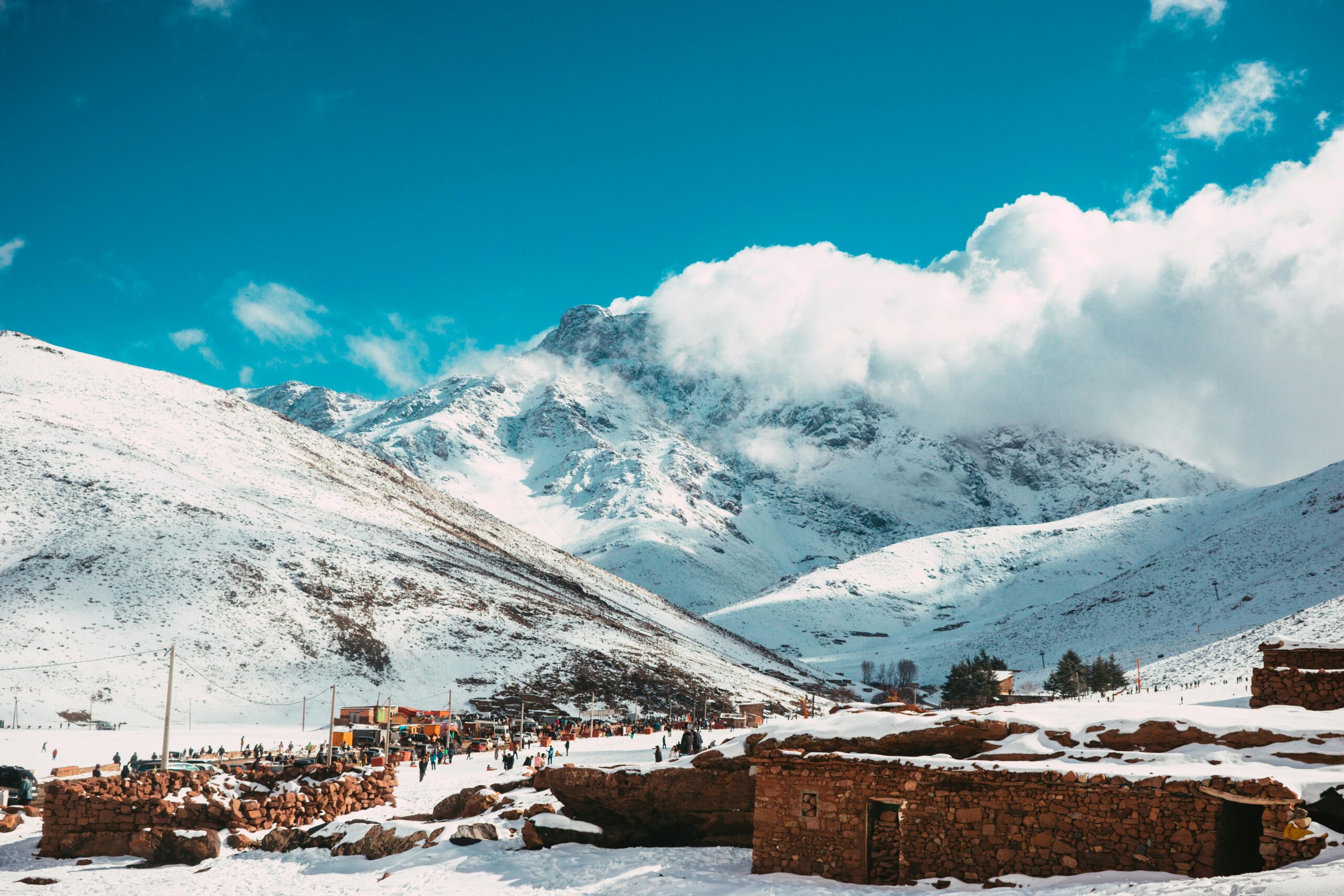
—The morning the sky was already saying something. Imlil, before the rain.
We started the hike from Imlil at around nine in the morning. Three of us, and a fourth — a friend who had just got his guide license. Fresh license, same age, same energy, same blind confidence. Nobody in the group was actually the adult in the room.
I had done Toubkal in my head a hundred times. I knew the altitude. I knew the refuge. I knew the route the way you know a road you’ve only ever seen on a map — which is to say, not at all.
The sky was already saying something when we started. Not dramatic — just unsettled. The kind of light that doesn’t fully arrive. Clouds sitting too low, moving too fast. We saw it. We chose not to read it.
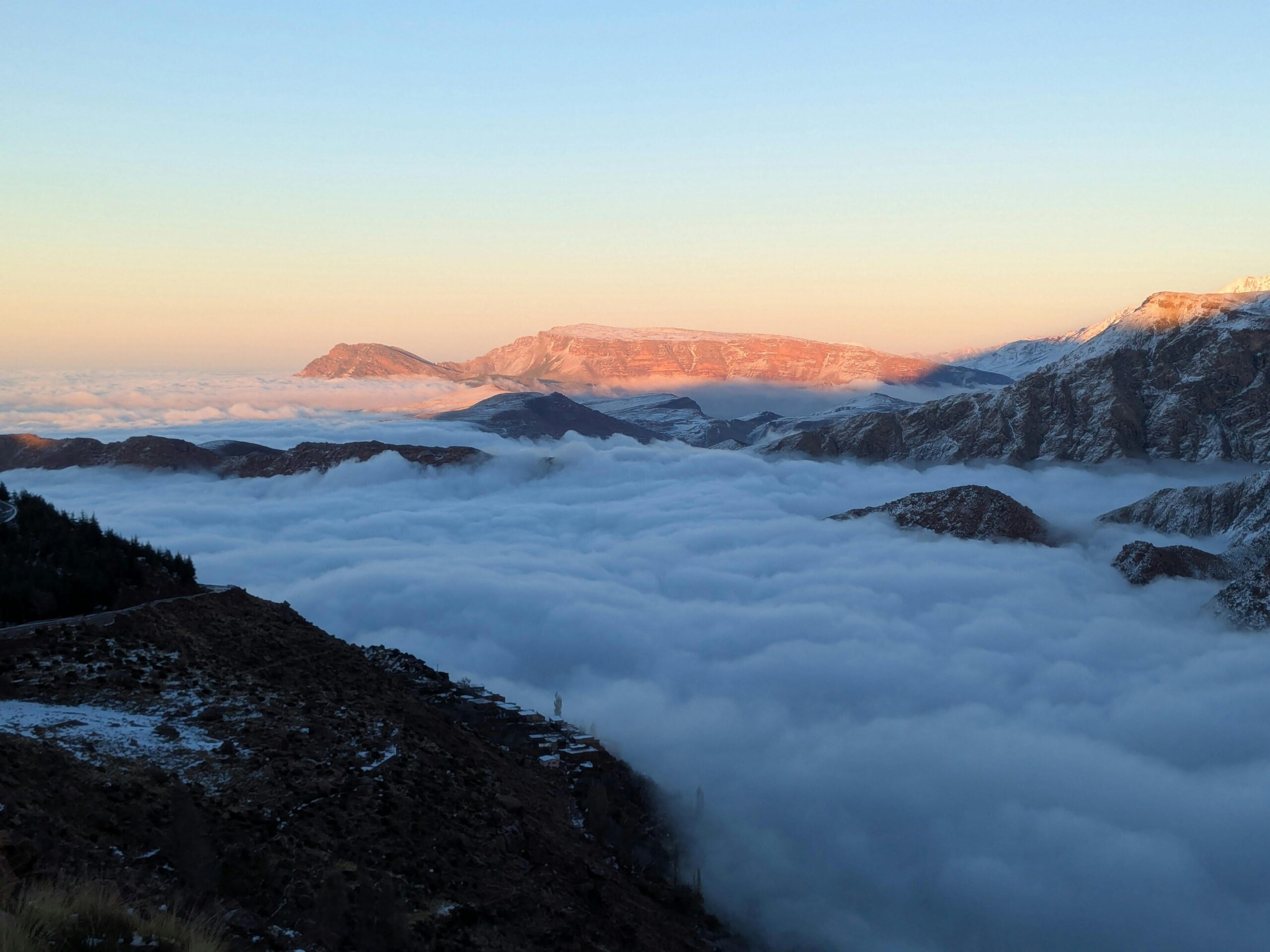
Before we had even cleared the edge of the village, the rain started. Light at first, the kind you walk through without stopping. Then heavier. Then the temperature dropped in a way that felt deliberate, and the rain became something else — colder, thicker, the first suggestion of snow mixed in. We were not yet an hour into the hike. The refuge was still hours above us.
We kept going.
I don’t know exactly why. Pride, maybe. The sunk cost of the early alarm, the drive, the packed bag. The unwillingness to be the one who suggests turning back. We kept going and the mountain kept telling us, in every language it had, that we were wrong.
The mountain kept telling us, in every language it had, that we were wrong.
Somewhere above Imlil
We turned back
We turned back well before the refuge. Not at the summit, not at some heroic final push — before we even got close. The snow had thickened, the path had disappeared under it, and the cold had moved from uncomfortable to serious. There was nothing to summit. There was only the decision to stop pretending.
We made it to the refuge. Wet, cold, quiet. That night we slept with the sound of the storm against the walls.
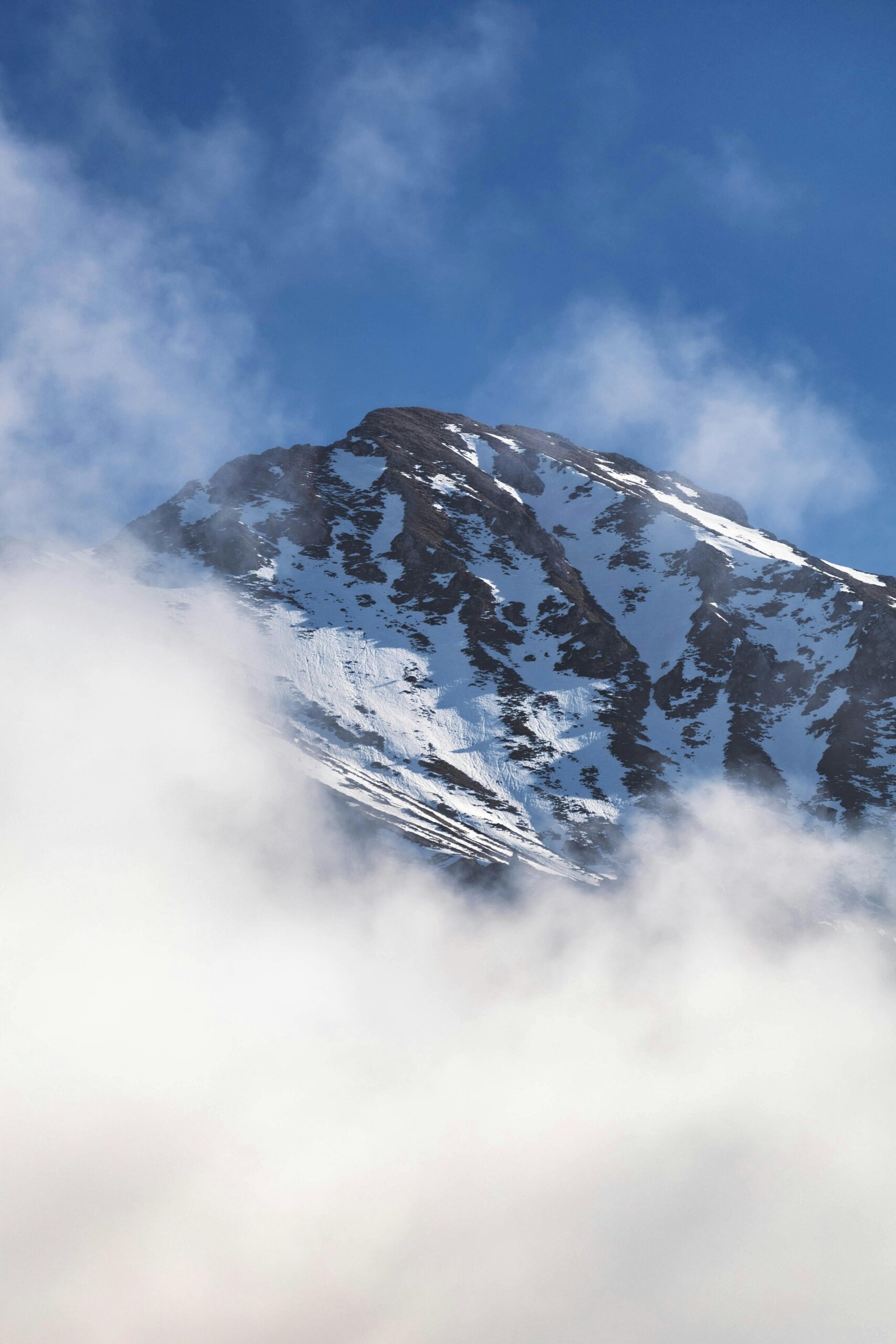
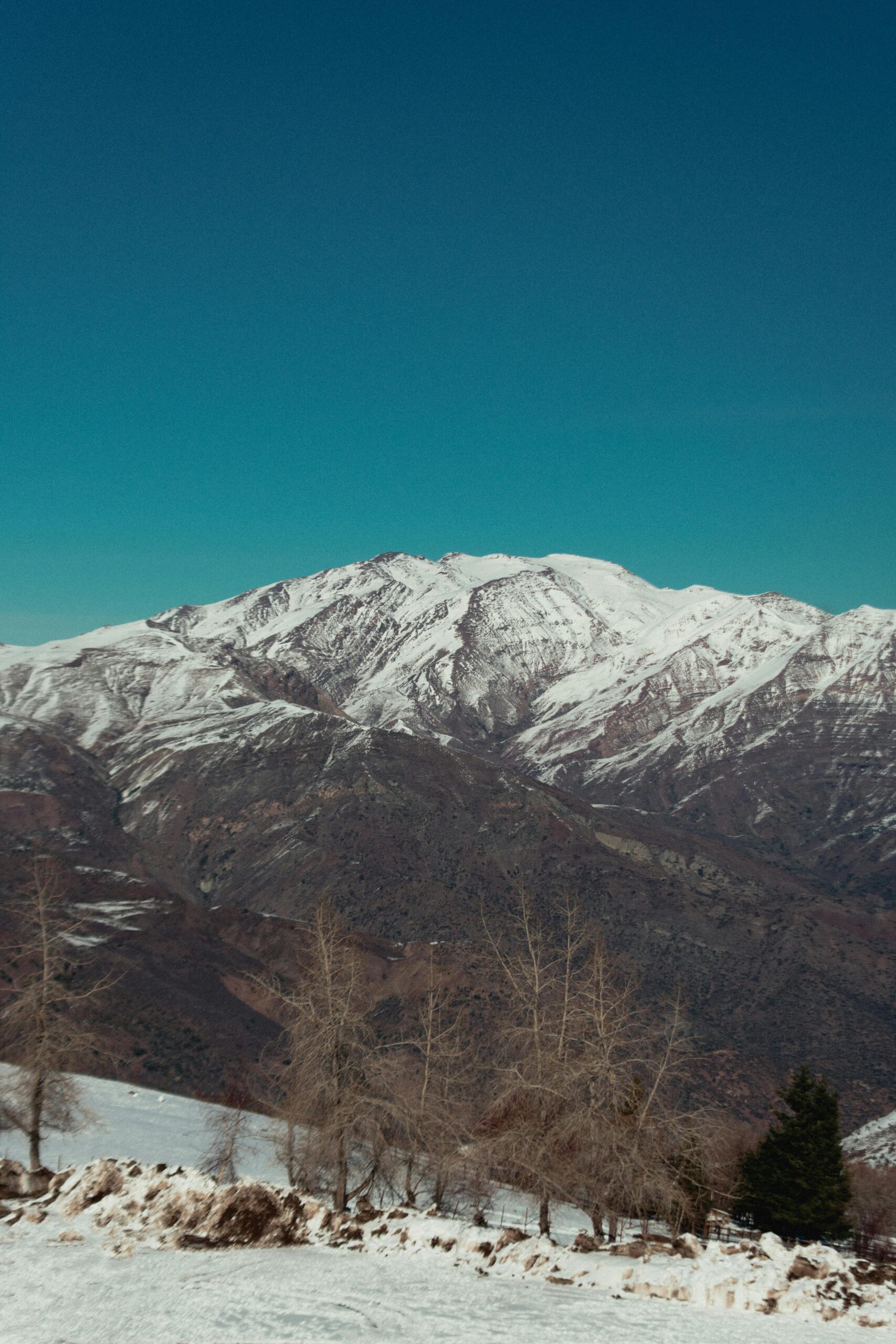
Left — the refuge that night. Right — the verglass, the morning after, the reason no one summited.
In the morning, a few of the other trekkers there — experienced, properly equipped, crampons, snowwalkers, the full kit — decided to try for the summit. They went up. They came back an hour later. The verglass was total. Ice over everything, no grip even with crampons, the mountain completely sealed. They sat down at the refuge table, said nothing for a while, and then someone ordered breakfast.
After we ate, we went back down to Imlil.
Back in the village
When we reached the village, someone told us the news. Two travelers had been out on the mountain that day. They had slipped. They were found by the river, with difficulty. They didn’t make it back.
We stood there and didn’t say anything for a long time.
The man from the tea house
He knew before we left.
The man from the tea house was nearby. He had looked at our shoes the evening before and said nothing. He looked at us now — wet, quiet, carrying the weight of a mountain that hadn’t let us in — and still said nothing. He didn’t need to.
He knew before we left. The clouds, the season, the forecast he had been reading his whole life without ever calling it a forecast. He said nothing because we hadn’t asked.
Not indifference — respect. Locals here don’t impose. They don’t stop an adventurous person at the door and tell them what to do. If you arrive with your mind already made up, they will not try to unmake it. They know it won’t land. They’ve seen it too many times.
But if you ask — that changes everything. If you sit down and say: what did you see this morning, what does this sky mean, is today a good day or should we wait — they will tell you exactly what they know. They will tell you to wait for the sun. They will tell you which days the mountain opens and which days it doesn’t. They will save your trip, or your life, with a single honest answer.
We didn’t ask. That’s the whole story.
Asmoon
What we needed
If you’re planning Toubkal — you’ve read the distances, the altitude, the gear lists. You know the numbers. But up there, in the wet and the cold, none of that was the thing we needed. We needed someone from the valley. Someone who had watched that sky a thousand mornings and knew what it meant before it happened.
We had a guide with us. A friend, newly licensed, as young and as certain as the rest of us. A guide in name — but not yet in knowledge. And that is not a criticism of him. It is the point. A license is a piece of paper. What you need on a mountain, or in a medina, or crossing a desert, is someone whose knowledge was earned over years — not issued in a classroom.
We were locals ourselves — and we still needed a real local.
That’s the honest reason DIY in Morocco exists. And it’s why every guide, every contact, every supplier in our plans is there because we know their work — not because they have a certificate. Just to make sure you have what we didn’t have that morning — someone who already knows, before you set off.