
· luxury travel in Morocco
13 min · 5 categories · By Izem
Where Morocco gets quiet.
Boutique riads with their own hammam, Atlas kasbah-hotels, private desert camps, vetted drivers, chef's-table dinners. The kind of luxury that doesn't show off — it just disappears.
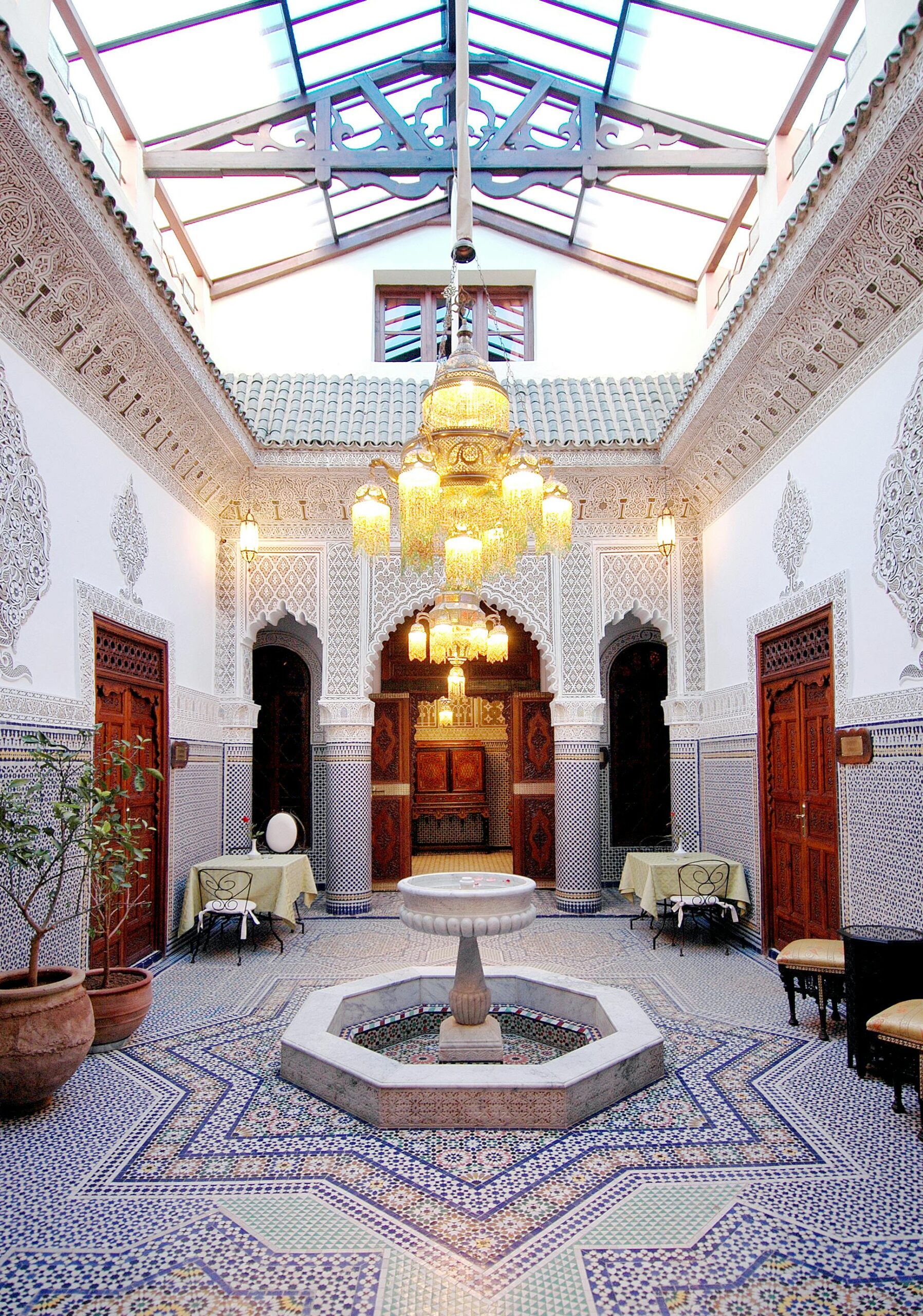
A note from Izem. I've booked the same handful of riads for fifteen years. They don't advertise. They survive because their guests tell three friends each, and that's enough.
Luxury in Morocco isn't velvet and gold. It's the silence after a heavy door closes behind you. The hammam in your own riad at 11pm with no one waiting. The driver who knew your name and your coffee before you arrived. The chef who picks dinner herbs from the courtyard while you have your aperitif.
The brands you'll see on travel magazine covers — the gold-leaf riads, the celebrity-favourite resorts — aren't necessarily wrong, but they're a particular kind of luxury: the visible kind. This guide is about the invisible kind. The 6-room riad with a Michelin-level kitchen and no Instagram presence. The Atlas kasbah-hotel where the owner walks you through the gardens. The desert camp that doesn't share a dune with another camp for 5 kilometres.
Five categories. Named picks throughout (yes, by name — this is the only place we do that publicly). And the honest price for each. Read it like a notebook of phone numbers — the people we'd put you in touch with if you wrote to us.
Luxury that announces itself is mostly performance. The real version just disappears around you.Izem · from the field
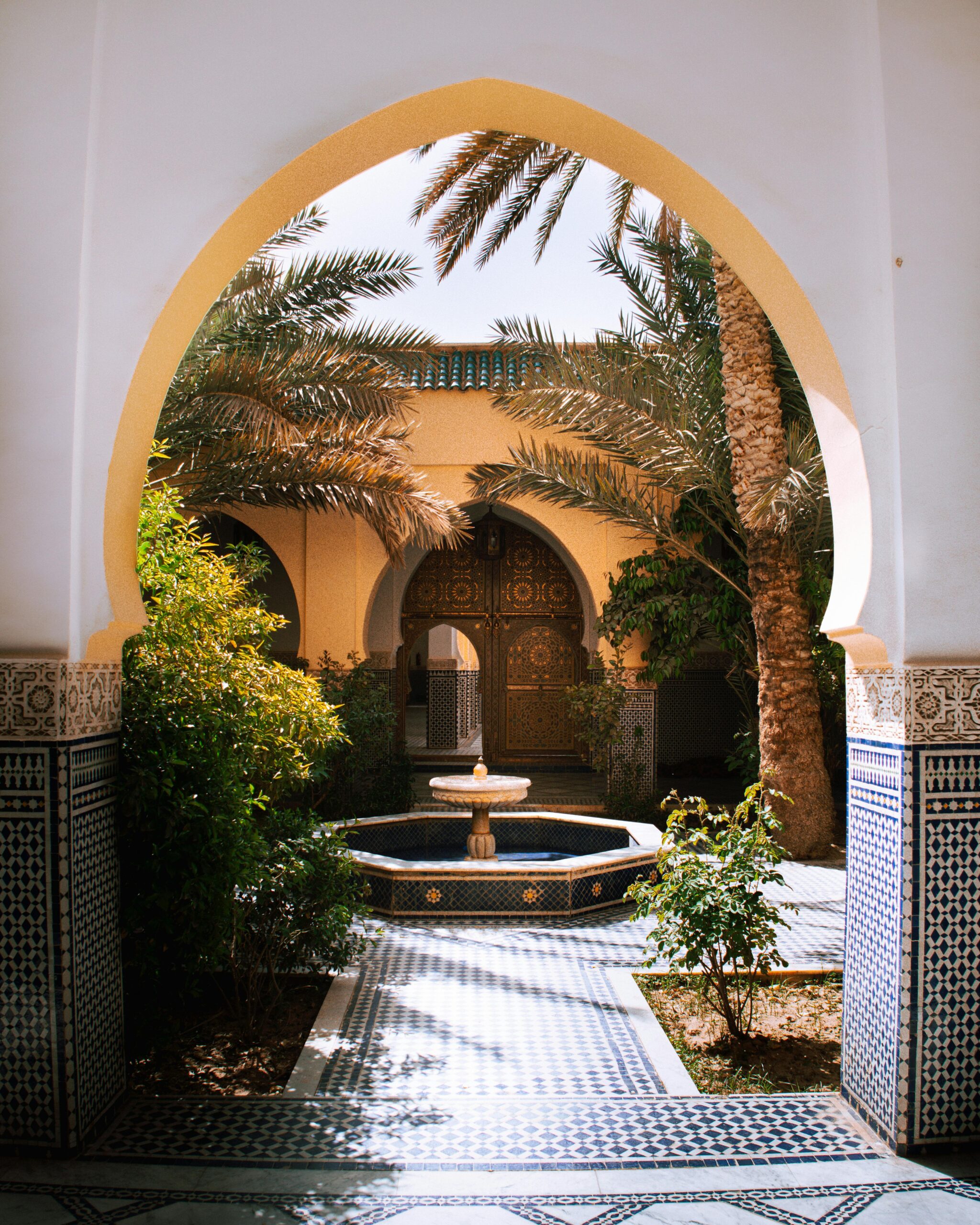
The doors with no signs are usually the ones worth knocking on.
The five quiet splurges
Where Morocco gets genuinely good.
Five categories that hold the real high-end of this country — each with its named picks, its honest price, and the small details that separate the real thing from the show.
Boutique riads with their own hammam.
Seven to twelve rooms maximum. An unmarked door on a medina lane. Inside: a courtyard with a fountain, a chef who has cooked there for fifteen years, a hammam carved into the basement that you book the way you'd book a private cinema. The mint tea arrives without asking. The flat-screen is hidden behind a painted panel. The owner usually knows your name by the second morning.
The detail that separates a real boutique riad from a hotel pretending to be one: the door has no sign, the front desk is a single person, and the breakfast menu changes daily because the chef went to the market.
- Royal Mansour — Marrakech medina, 53 private riads inside one walled compound. The grandest version.From 8,000 MAD / night.
- Riad El Fenn — Marrakech, art-filled, 28 rooms, multiple pools, a hammam that's the city's quietly best. 3,000–6,000 MAD.
- L'Hotel Marrakech — Jasper Conran's 5-suite Marrakech hideaway. Garden, pool, library, unsigned door. From 5,500 MAD.
- Riad Idra — Fès medina, six rooms, candlelit dinners on the rooftop overlooking the old city. 2,800–4,500 MAD.
Atlas kasbah-hotels.
Restored fortress-houses of the High Atlas, turned into 8–20-room hotels. Walls a metre thick, cool in summer, warm in winter. Berber rugs on flagstone floors. A fireplace in the salon, a hammam carved into the rock, terraced gardens running down to the river. The chef is from the next village; the herbs are picked that morning. You hear nothing at night except wind.
The luxury here is geographic: you're at 1,500–2,000 metres, surrounded by Berber farmland, with the silence and stars that money in a city can't buy. Pair with an in-house guide for day-hikes from the door.
- Kasbah du Toubkal — Imlil, 1,800m, the original eco-luxury kasbah-hotel. View of Toubkal from the terrace. From 2,500 MAD half-board.
- Kasbah Tamadot — Asni, Richard Branson's Atlas hideaway. 28 rooms, infinity pool over the valley, Berber tent suites. From 7,500 MAD.
- Domaine de la Roseraie — Ouirgane, family-run since 1973, walnut groves, horse riding, working farm. 2,000–3,500 MAD.
- Kasbah Bab Ourika — Ourika valley, 30 minutes from Marrakech, hilltop perch, infinity pool over the Atlas. From 3,800 MAD.
Private desert camps.
Group-tour camps in Merzouga are pleasant but never private — 20 tents in a row, shared bathrooms, shared dinner times. The real luxury is 30 minutes deeper into the dunes: a small camp of 4–6 tents, your own staff, your own table for dinner on a Berber rug under the stars. Not another light visible for five kilometres.
Bath drawn before sunset (heated water in a copper tub). Three-course dinner served by candlelight as the wind shifts. A guide who knows the constellations in three languages. The morning sunrise camel walk timed so you have the dunes to yourself.
- Erg Chigaga Luxury Camp — the deeper, harder-to-reach Saharan erg. 4WD only. Six tents. From 4,500 MAD per couple, full board.
- Azalai Desert Camp — Merzouga, but the private-pavilion version. Hot-water bucket showers, individual fireplaces. From 4,800 MAD.
- Madu Luxury Desert Camp — Merzouga, eight luxury tents, French-trained chef, hammam tent. From 5,200 MAD.
- La Pause — Agafay (the "closer" rocky desert, an hour from Marrakech). 24 berber-tent suites. Easier if you can't spare 2 days for Erg Chigaga. From 3,200 MAD.
A private driver, the whole trip.
A vetted driver-guide who is yours for the whole 7–14 days — airport to airport — not a series of transfers handed off between operators. Same car, same person, same WhatsApp. They learn your coffee order on day one, know which riad has the best rooftop, drive on the inside of mountain roads so you can take photos out the window, and save your day when the medina has a power cut and the riad can't be reached.
The cars are usually a Mercedes V-Class or a Land Cruiser for desert legs. The drivers are licensed multi-language guides who chose this path over the bus-tour rotation. The car is half the value; the driver is the rest.
- We pair you directly — we won't name drivers publicly here. Write to us and we'll match you to the right person for your route.
- Mercedes V-Class with 4 passengers max — the most-used set-up for couples and small families. From 1,500 MAD / day with driver.
- Land Cruiser for desert legs — if your route includes Sahara dunes. From 2,200 MAD / day with driver.
- English & French speakers, minimum — most also speak Spanish and basic German. Several speak Berber/Tamazight for Atlas village stops.
Chef's-table dinners.
The chef cooks for you alone. Either a 6–8 course tasting menu at a restaurant's private kitchen table, or a private chef who comes to your riad and cooks in their kitchen while you have an aperitif in the courtyard. Or a single named cook who runs a 4-table restaurant out of her family home, with a set menu that changes every Friday. The wine pairing is real. The conversation with the chef at the end is the point.
This is the version of dinner that doesn't fit a tagine-on-Tripadvisor brief. Reservations through your riad host or directly with the chef — usually a week ahead, sometimes more.
- La Mamounia tasting menu — Marrakech, the heritage hotel's tasting kitchen. 7 courses, wine pairing. From 1,500 MAD / person.
- Le Saveur du Poisson — Tangier, no menu, the chef serves you whatever came in that morning. 7 courses, 280 MAD total. The most surprising value in the country.
- La Maison Arabe cooking class + dinner — Marrakech, Chef Najat. You cook half, she cooks the rest. From 700 MAD / person.
- Dar Yacout — Marrakech, set 7-course Moroccan dinner with traditional music. Slightly touristed now but still the classic. From 850 MAD / person.
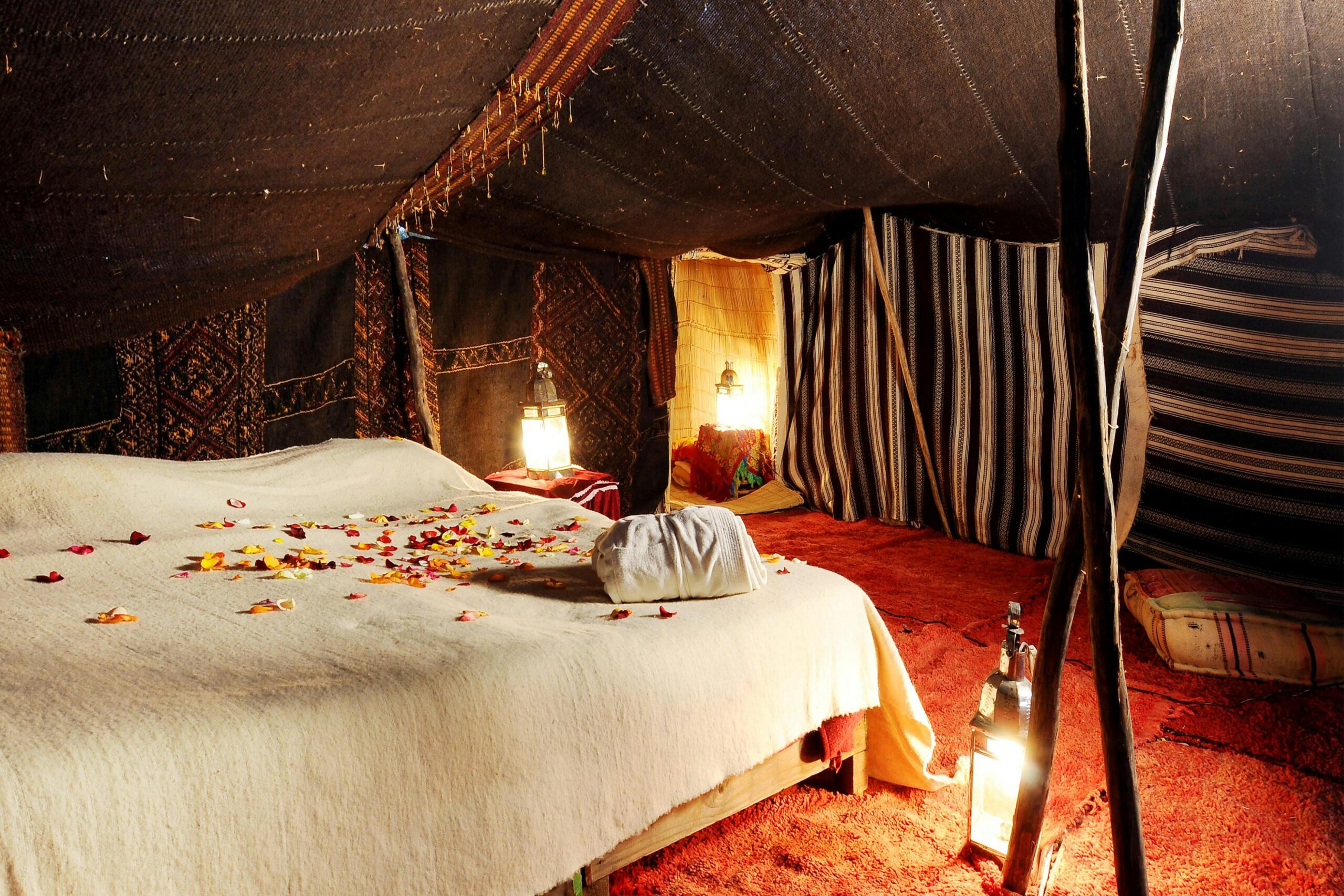
A small camp five kilometres from the nearest light. The luxury is the silence and the stars.
What this is — and isn't
The line between luxury and performance.
Most travellers who book "Morocco luxury" from abroad end up with the visible version — gold trim, brand names, big resorts. Here's how to land on the version that actually disappears around you.
Seek out
- Riads with fewer than 12 rooms The room count is the single best predictor. Fewer rooms = more personal service, better food, an owner who knows you by name. Royal Mansour is the rare exception (53 riads inside one walled compound, each its own bubble).
- The same driver for the whole trip Don't book transfers between providers. One driver, the whole route, on WhatsApp. Pay 1,500–2,500 MAD/day. This is the single most upgrade-feeling decision you'll make.
- Pre-arranged chef dinners through the riad Ask your riad host 48 hours ahead: "Can you arrange a chef's-table dinner here for two?" Almost every boutique riad will. Often better than any restaurant in the city.
- An Atlas night between the desert and the city Two days in Marrakech, one Atlas kasbah-hotel night, three desert nights, one more Atlas night, back to a different Marrakech riad. The rhythm is the luxury.
- Booking direct, not through OTAs Boutique riads give better rates direct (their email > Booking.com), often with a free extra night, an in-room massage, or a private hammam slot. Always email first.
Skip
- Big-brand resorts on the medina outskirts The 200-room international resorts in Hivernage or Palmeraie are pleasant but you'll never feel Morocco from inside them. They're a French Riviera in beige, with tagine on the menu.
- "Luxury desert tour" group packages If the brochure shows tents in rows or mentions "25-person camp", it's not private. The group versions are fine; the luxury version is a separate booking entirely.
- Anything with the word "palace" in the name on a billboard Real palaces don't put themselves on billboards. The El Badi-this and Sultan-that on airport-road signage are tourist constructions. The actual royal palaces are unmarked.
- The tagine in a hotel restaurant Hotel-restaurant tagines run on autopilot for tourists. Eat at the riad's kitchen (where the chef tastes everything) or at a named city restaurant. The hotel dining room is for breakfast.
- Chauffeur services rented by the hour By-the-hour means a driver-stranger who won't remember you tomorrow. Book by the day, full trip, same person. Trust accumulates fast and the experience changes by day three.
Things we learned the hard way
Notes from fifteen years of bookings.
Small, specific, lived. The kind of detail that only comes from booking the same handful of riads year after year.
— Izem
The email-first rule.
Boutique riads charge less when you email direct, not when you book through Booking.com or Expedia. The difference is 15–25%, plus extras: a free dinner, an in-room massage, a private hammam slot, a half-day driver. Always email the riad first. Most reply within 24 hours, often within the hour, often from the owner. The conversation that follows is also part of the luxury — you arrive already feeling expected.
— Amghar
The off-season splurge trick.
Royal Mansour, La Mamounia, Riad El Fenn — the famous luxury names — cut rates 30–40% in November (after the Marrakech Film Festival) and again in January (post-holidays). Same chef, same hammam, same rooms. Just no Easter crowds and no peak-October film-people. If you've ever dreamed of a 12,000 MAD/night riad, the off-season version is the same room for 7,500.
— Asmoon
The desert-camp 48-hour minimum.
A single night at a private desert camp is too short. You arrive at sunset, eat, sleep, and leave at dawn — you've barely seen the dunes. Two nights is the right number. The middle day is the magic: nothing to do but walk dunes, drink tea, nap in the shaded tent, watch the stars in stages. Don't compromise this. If your trip is short, skip the desert entirely rather than do one night.
— Izem
The riad-owner introduction.
Every great Moroccan riad has an owner who is the soul of the place — not the front-desk manager, the actual owner. Ask to meet them, on the first evening, over a mint tea on the rooftop. They will say yes, every time, if asked politely. The 30-minute conversation that follows reshapes the rest of your trip: they'll recommend restaurants you'd never find, a tour guide they trust personally, a hammam to skip, a quiet square at 6pm. Worth more than any guidebook.